
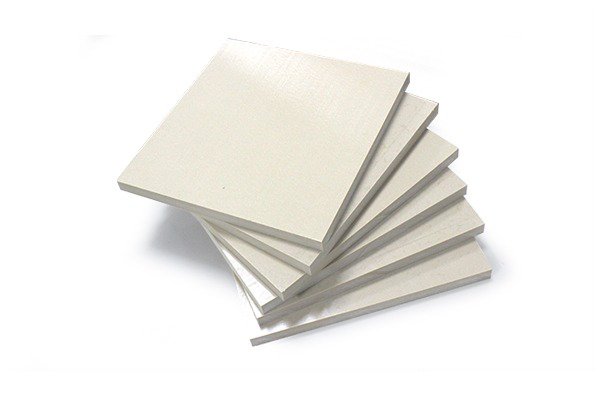
Polyphenylene sulfide (PPS) is a high-rigidity, high-molecular crystalline polymer with excellent performance and a wide range of uses. Its outstanding properties are as follows:
- Excellent heat resistance: Its heat distortion temperature exceeds 260 ℃, and the long-term service temperature is 220-240 ℃. It decomposes at 700 ℃ in air and retains 40% of its weight at 1000 ℃ in inert gas. Both short-term heat resistance and long-term continuous service thermal stability are superior to all current engineering plastics.
- Intrinsic flame retardancy: It can reach UL94V-0 level. No flame retardants need to be added when manufacturing flame-retardant products, maintaining the high mechanical properties of the material itself.
- Good mechanical properties: It has extremely high rigidity, high surface hardness, and excellent creep resistance and fatigue resistance.
- Excellent chemical resistance: No solvent that can dissolve PPS below 200 ℃ has been found so far. It also has strong resistance to inorganic acids, alkalis, and salts.
- Good dimensional stability: It has a very small molding shrinkage rate, low water absorption, and a small linear thermal expansion coefficient. It still shows good dimensional stability under high temperature or high humidity conditions. Therefore, it has a wide range of applications in machinery, chemical industry, instrumentation, aerospace and other fields.
- Excellent electrical properties: It maintains excellent electrical properties even under high temperature, high humidity, and high frequency conditions.
- Outstanding wear resistance: Its wear resistance can be significantly improved by filling with lubricants such as fluororesin and carbon fiber.
- Radiation resistance: It can withstand a dose of 1 × 10^8 Gy, which is unmatched by other engineering plastics, making it an excellent material in fields such as electronic instruments and aerospace.
- PPS resin has very low melt viscosity and good fluidity, and is easily wetted and contacted with glass fibers. At the same time, it is easily wetted with various fillers. The glass fiber or inorganic filler-reinforced injection molding grade pellets prepared with it have extremely high tensile resistance, impact resistance, bending resistance, and ductility.
- PPS has very high bonding strength to glass, aluminum, stainless steel, etc. Its bonding strength to glass is even greater than the cohesion of glass. Due to its good corrosion resistance and bonding performance, it is easy to make linings for chemical equipment.
- Due to the excellent corrosion resistance of PPS, it is not easy to bond, and ultrasonic welding is its best bonding method.
Main application ranges of PPS rods:
PPS in electronics and electrical: Microelectronic component packaging, connectors, terminals, sockets, coil bobbins, trimmer capacitors, fuse bases.
PPS rods in machinery and instrumentation: Pump casings, pump impellers, bearings, gears, pulleys, universal joints, gaskets, flanges, counters, levels, flowmeter components.
PPS in the automotive field: Temperature sensors, carburetors, purifiers, fuel pumps, seat bases, water tank chambers.
PPS rods in household appliances: Electric fans, microwave oven brackets, dryers, coffee makers, rice cookers, hair dryers, hair curlers, air conditioning compressors.
PPS fibers and films: Blending PPS fibers with other synthetic fibers can produce high-performance industrial filter cloths and radiation-resistant aerospace fabrics. PPS films are good F-class insulating materials, which can be made into capacitors, impedance electronic components, flat coil bobbins, wire coatings, covers, carburetor diaphragms, thermal printing materials, floppy disks, photosensitive strips for electrophotography, etc.