
In the fields of protein purification, monoclonal antibody preparation, peptide analysis, traditional Chinese medicine (TCM) separation, and precision liquid chromatography, the pump head directly determines data accuracy, sample recovery rate, equipment lifespan, and process compliance.
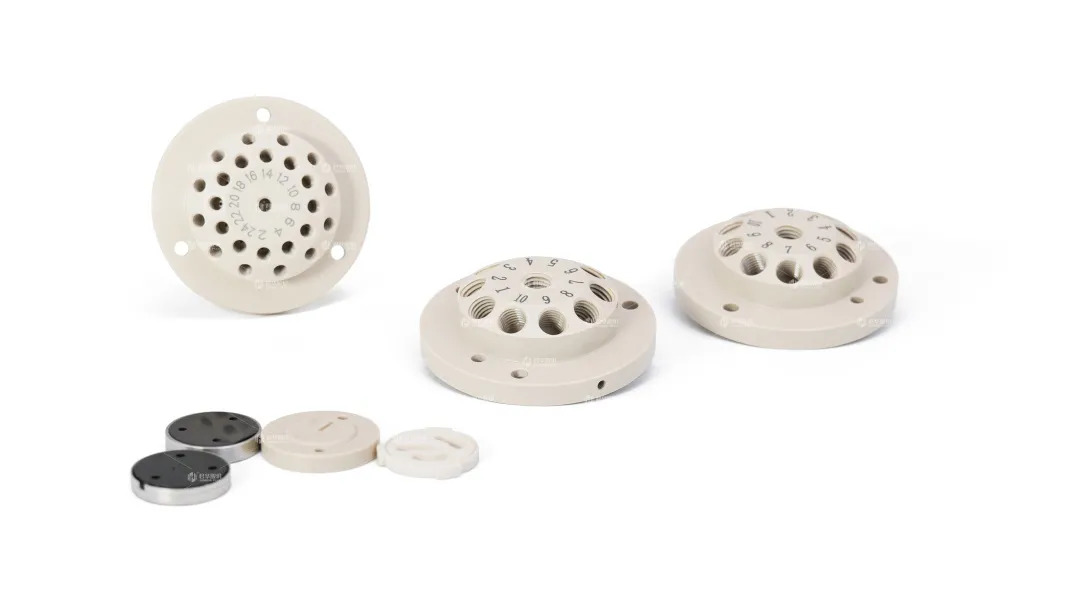
Currently, mainstream pump heads in chromatography equipment are primarily made from three types of materials: 316L Stainless Steel (the baseline metal material in the industry), Titanium Alloy (the traditional high-end metal material), and Medical-grade PEEK (a high-performance polymer).
While traditional 316L stainless steel and titanium alloy pump heads once dominated the market due to their high metallic strength, high-performance bio-inert PEEK (Polyetheretherketone) pump heads have now become standard equipment for laboratories, pilot plants, and industrial chromatography systems due to their comprehensive performance advantages.
Part 01 | Core Material Differences: PEEK Leads Across the Board
1. Chemical Inertness & Solvent Resistance
- PEEK Pump Head: Medical-grade PEEK offers ultimate chemical inertness. It resists full-pH buffer solutions, high salt concentrations, organic solvents (methanol, acetonitrile, tetrahydrofuran), organic acids, alkalis, and chaotropic agents like urea or guanidine hydrochloride. It features zero ion leaching and zero oxide film shedding, ensuring no corrosion or contamination under pure organic solvent or strong acid/alkali conditions.
- Titanium Alloy Pump Head: Relies on a surface passivation film for corrosion resistance, which is stable only in neutral aqueous environments. Prolonged contact with organic solvents like methanol or acetonitrile degrades the passivation film, leading to titanium ion leaching. Phosphate or chelating buffers accelerate metal dissolution, making it prone to adsorbing antibodies and proteins, resulting in yield loss.
- 316L Stainless Steel Pump Head: The lowest-cost and most widely used baseline metal material, but with the poorest corrosion resistance. It also relies on a passivation film and cannot tolerate strong acids, high salt, chloride-rich environments, or high proportions of organic phases. It easily leaches heavy metal ions (iron, chromium, nickel) and suffers from pitting and intergranular corrosion in chloride environments. The risk of media contamination is far higher than with titanium alloy.
2. Biocompatibility & Low Adsorption
- PEEK Pump Head: Non-metallic with no active adsorption sites. It demonstrates minimal to no adsorption of proteins, peptides, nucleic acids, and polysaccharides, significantly improving the recovery rate of low-abundance samples. It eliminates chromatographic anomalies such as protein denaturation, peak tailing, and reduced resolution at the root cause, fully complying with FDA and GMP pharmaceutical requirements.
- Titanium Alloy Pump Head: Contains metallic coordination adsorption sites. Acidic peptides and phosphorylated proteins easily adsorb onto the internal walls, causing quantitative bias and loss of target components. It requires frequent downtime for passivation and cleaning, while dissolved metal ions can destroy the activity and stability of biopharmaceuticals.
- 316L Stainless Steel Pump Head: Contains the highest number of active surface adsorption sites, causing the most severe adsorption of macromolecular biological samples. Leached heavy metal ions can complex with active pharmaceutical ingredients (APIs), causing sample inactivation. Repeated Clean-in-Place (CIP) cycles increase internal surface roughness, severely increasing the risk of material wall-hanging and cross-contamination, making it unsuitable for high-end biopharmaceuticals and trace analysis.
3. Physical Performance & Service Life
- PEEK Pump Head: The density of PEEK is only 1/5 that of titanium alloy and 1/6 that of 316L stainless steel. Its lightweight structure reduces pump body load, fluid pulsation, and motor wear. Featuring self-lubricating properties and a low friction coefficient, it minimizes plunger wear and eliminates metal debris contamination. With strong structural dimensional stability, it can continuously withstand high pressures up to 30 MPa, meeting the high-pressure demands of industrial chromatography.
- Titanium Alloy Pump Head: Heavy self-weight leads to noticeable vibration and fluid pulsation during operation. Metal friction generates micro-metal particles, creating a risk of line clogging. High material rigidity accelerates seal wear, leading to higher equipment operation and component replacement costs.
- 316L Stainless Steel Pump Head: Has the highest density and heaviest weight among the three, causing the most severe pulsation and mechanical vibration. Its high metal hardness and friction loss result in the highest probability of dust generation and tubing blockages. It wears out seals the fastest, resulting in the highest overall failure rate and maintenance costs.
4. Temperature & Sterilization Compatibility
- PEEK Pump Head: Withstands a broad operating temperature range from -50°C to 250°C. It supports high-temperature autoclave sterilization, steam-in-place (SIP), and full acid/alkali CIP cycles. It retains its shape without deformation or substance leaching even after thousands of sterilization cycles, making it a perfect fit for continuous, sterile biopharmaceutical manufacturing.
- Titanium Alloy Pump Head: High-temperature, humid, and heat-intensive environments easily damage the surface passivation film, sharply increasing the risk of corrosion and metal leaching after repeated sterilization cycles. It does not tolerate strong alkaline CIP solutions, imposing many process and maintenance limitations.
- 316L Stainless Steel Pump Head: Limited heat resistance; moist-heat sterilization easily breaks down the passivation layer. It is incompatible with strong alkali or high-salt cleaning systems. Frequent sterilization leads to recurring corrosion and pitting, causing severe heavy metal leaching that restricts its use in most high-end sterile pharmaceutical processes.
Part 02 | Application Scenarios: PEEK as the First Choice Across 5 Key Areas
- Biopharmaceutical Purification (Monoclonal Antibodies / Vaccines / Recombinant Proteins)
- PEEK is the primary choice. It preserves biological activity, ensures low sample loss, and remains sterile and free of metal impurities. Mainstream industrial chromatography systems now come standard with PEEK. 316L stainless steel has been largely phased out, while titanium alloy is gradually being retired as a transitional material.
- Precision Laboratory Analysis (Peptides / Nucleic Acids / LC-MS)
- PEEK is essential. Zero adsorption and zero metal ion interference guarantee precise detection of trace, low-abundance samples. Metal pump heads cause data distortion and are generally avoided in the industry.
- Traditional Chinese Medicine (TCM) & Natural Product Isolation
- PEEK is the optimal choice. It tolerates high proportions of organic solvents, operating stably without corroding or contaminating heat-sensitive natural components. Metal pump heads tend to corrode and contaminate active plant ingredients, impacting final drug efficacy and purity.
- Inorganic Ion & Metal Complex Analysis
- Metal pump heads are strictly prohibited. Only PEEK avoids releasing metal ions, ensuring authentic and reliable analytical data.
- Specialized Operating Conditions
- 316L stainless steel or titanium alloy pump heads are only used short-term in niche applications involving ultra-high pressures, non-biological activity, and purely aqueous phases with no organic solvents. However, even these scenarios are gradually being replaced by high-pressure reinforced PEEK pump heads.
Part 03 | Industry Trend: PEEK Pump Heads Lead the Material Upgrade
As requirements for inert chromatographic flow paths, zero foreign impurities, and GMP-compliant manufacturing continue to rise across the biopharmaceutical and precision analytical testing sectors, the inherent flaws of traditional metals—such as heavy metal leaching in 316L stainless steel and sample adsorption in titanium alloys—can no longer meet high-precision, high-purity standards.
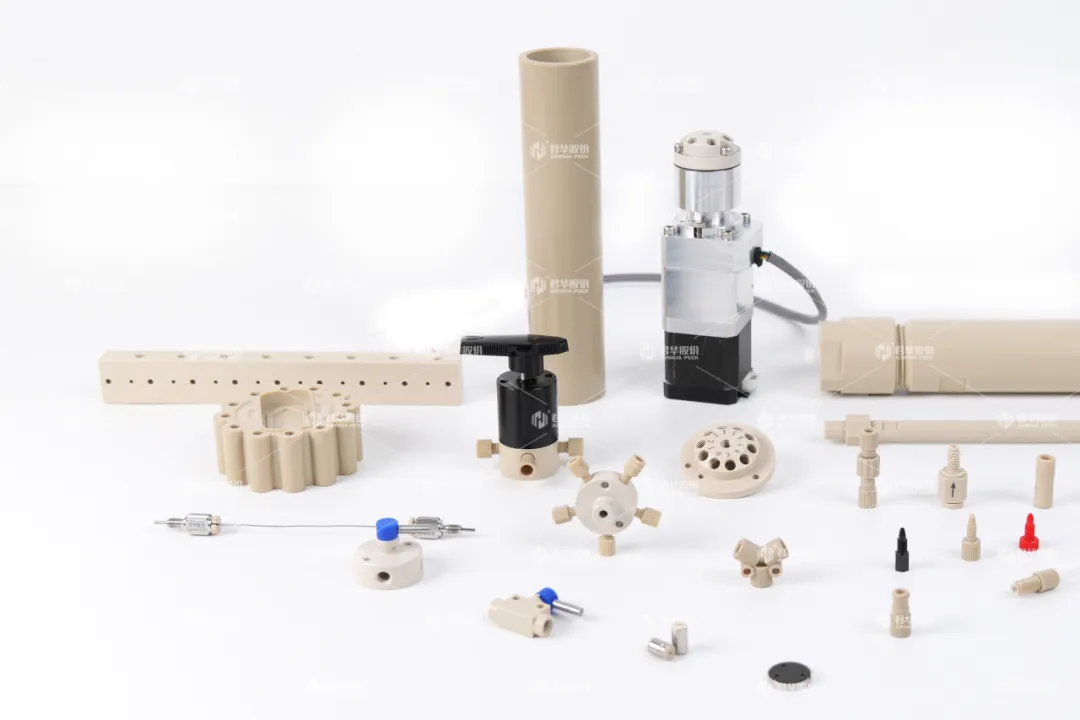
With the continuous maturation of high-pressure reinforced PEEK processing technologies, the pressure capacity of modern PEEK pump heads now fully covers the working limits of both metal materials, overcoming early limitations in pressure tolerance.
Industry survey data reveals that over 90% of newly added protein purification, preparative HPLC, and pilot-scale chromatography equipment over the past three years feature full PEEK flow path components. Demand for retrofitting older 316L stainless steel and titanium alloy equipment is surging. Replacing traditional metal pump heads with PEEK has become a standardized upgrade solution across the industry, establishing non-metallic inert flow paths as the long-term direction of chromatography technology.