
In the daily production of industrial manufacturing, enterprises often face three core dilemmas: the core components of valuable equipment are scrapped in advance due to long-term wear and corrosion, resulting in high replacement costs; ordinary materials experience rapid performance degradation in harsh environments such as high temperatures and strong corrosion, leading to reduced production efficiency and even potential safety hazards; precision components need to possess both the strength of metals and special properties such as insulation and wear resistance, making the search for suitable composite materials time-consuming and difficult. However, the emergence of PEEK coating technology is like tailoring a “protective armor” for metal components, easily solving these industry pain points.
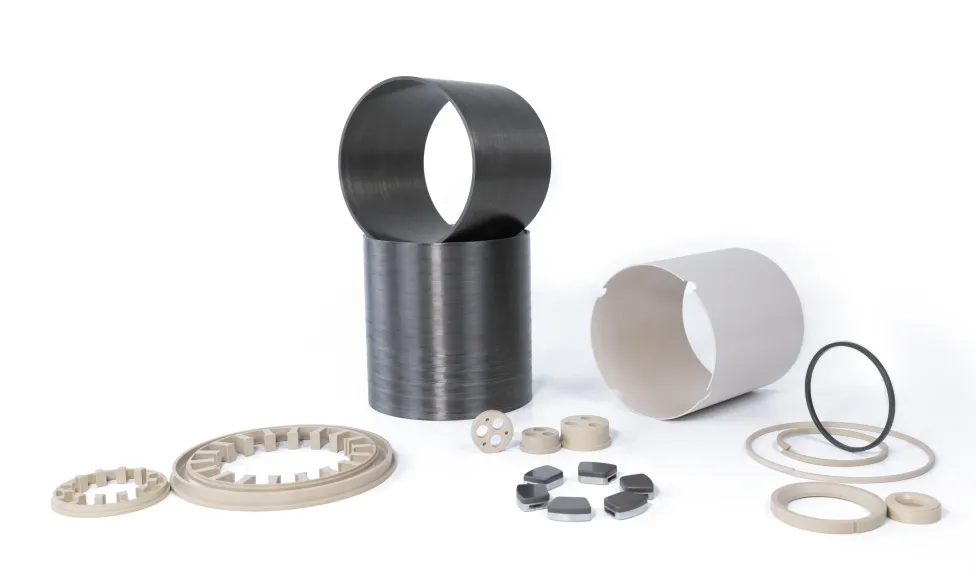
1. Understanding “The King of Plastics”: PEEK, the Outstanding Performance of Super Engineering Plastics
PEEK (Polyether Ether Ketone) is not an ordinary plastic, but a super engineering plastic known as “the king of plastics”. Its core performance can be regarded as an “all-rounder” among industrial materials:
- High Temperature Resistance: It can work stably in an environment of 260°C for a long time without performance degradation under high-temperature working conditions;
- Corrosion Resistance: It can resist the erosion of various strong corrosive media and perform stably in harsh environments such as chemical industry and petroleum;
- Mechanical and Friction Properties: It combines high mechanical strength with self-lubricating and wear-resistant characteristics, reducing the loss of components during operation;
- Insulation: It has excellent insulation performance, which can meet the insulation needs of electrical equipment and precision electronic components.
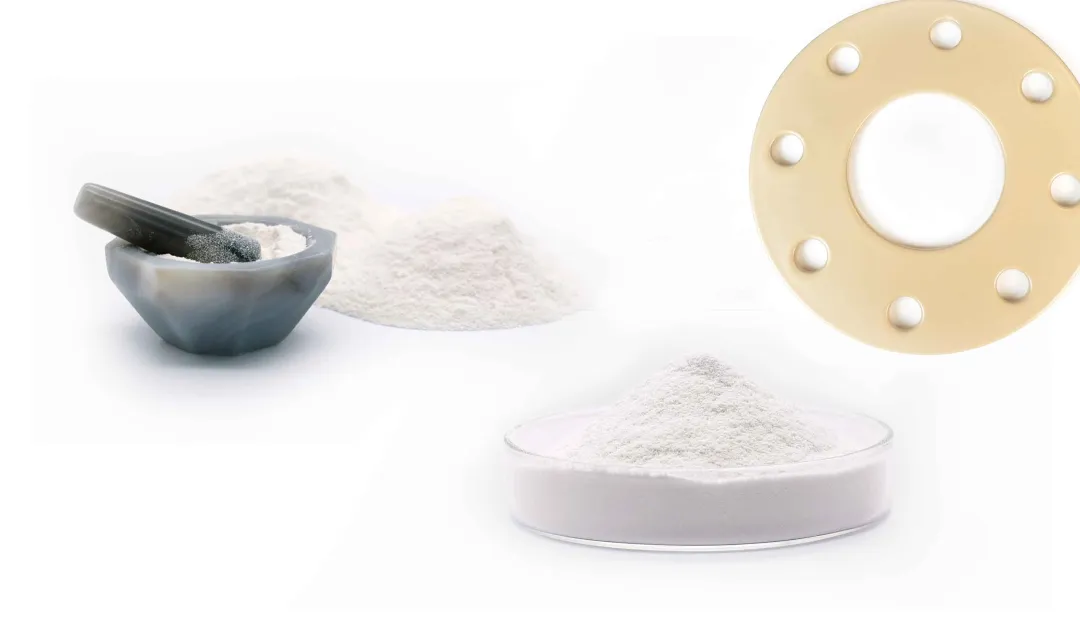
At present, PEEK raw materials have formed a diversified product system, covering resin powders and particles of different specifications to adapt to various coating scenarios:
| Raw Material Type | Specific Model | Characteristics |
|---|---|---|
| Pure Resin Fine Powder | PEEK5600P | High purity, suitable for basic protection scenarios |
| Pure Resin Coarse Powder | PEEK5600P | Moderate particle size, basic type for coating adhesion |
| Modified Reinforced Particles | PEEK5600CF30, JUNHUA-HT4600CF30 | Reinforced with carbon fiber, with better mechanical strength |
| Modified Reinforced Particles | PEEK5600GF30, PEEK5600SWR | Reinforced with glass fiber, upgraded wear resistance |
| Modified Reinforced Particles | PEEK5600CF30-GO | Special graphene modification, more comprehensive performance |
2. PEEK Coating: Dressing Metals in a “Micron-Level Protective Armor”
The core advantage of PEEK coating lies in “precision empowerment” — instead of manufacturing complete PEEK parts, it forms a dense and firm micron-level PEEK coating on the metal surface through advanced processes, allowing the base metal to directly inherit all the outstanding properties of PEEK.
To intuitively demonstrate the advantages of PEEK coatings, we conducted a wear resistance comparison test on three common industrial coatings: PEEK, PTFE, and PPS (test conditions: load 50N, rotation speed 400rpm, time 4h). The results are as follows:
| Measuring Object | Item | PEEK Coating | PTFE Coating | PPS Coating |
|---|---|---|---|---|
| Counter-Rotating Ring | Mass before friction (g) | 71.8747 | 71.8257 | 72.2697 |
| Mass after friction (g) | 71.8737 | 71.8181 | 72.2474 | |
| Wear amount (g) | 0.001 | 0.0076 | 0.0223 | |
| Wear rate (mg/h) | 0.25 | 1.9 | 5.575 | |
| Counter-Rotating Part (PEEK5600G) | Mass before friction (g) | 0.6237 | 0.6207 | 0.6237 |
| Mass after friction (g) | 0.6228 | 0.6203 | 0.5988 | |
| Wear amount (g) | 0.0009 | 0.0004 | 0.0249 | |
| Wear rate (mg/h) | 0.225 | 0.1 | 6.225 |
It can be seen from the test data that the PEEK coating performs prominently in overall wear resistance. Especially, the wear amount and wear rate of the counter-rotating ring are much lower than those of the PPS coating, and its comprehensive protection performance is more suitable for long-term and high-frequency use scenarios.
This “micron-level armor” can bring four core improvements to metal components:
- Extreme Wear Resistance, Doubled Service Life: Reduce the physical loss of components during operation and extend the service life of core equipment components;
- Corrosion Resistance, Fearless of Harsh Conditions: Isolate corrosive media from contact with the metal matrix, adapting to harsh environments such as chemical industry and marine;
- Smooth Surface, Reduced Retention: The non-stick property of the coating surface is significant, reducing the risk of material residue on the component surface;
- Reliable Insulation, Ensuring Safety: Meet the insulation needs of electrical equipment and avoid safety accidents caused by electric leakage.
3. Technological Breakthrough: New-Generation Electrostatic Coating, Upgrading Protection Capability
Traditional coating technology is often limited by three problems: “weak adhesion, loose coating, and uneven coverage”. However, the new-generation electrostatic coating process has made targeted breakthroughs in these bottlenecks, achieving an upgrade in protection performance:
- Surge in Adhesion: Through the dual effects of electrostatic adsorption and mechanical interlocking, the coating adheres more firmly to the metal matrix, greatly reducing the risk of peeling;
- Denser Coating: Precisely control parameters such as coating pressure and temperature, resulting in extremely low porosity of the coating, which can fully isolate external erosion;
- More Uniform Coverage: Equipped with intelligent coating equipment, it can adapt to components with complex shapes (such as special-shaped pipes and internal cavities) to achieve full-coverage without dead corners.
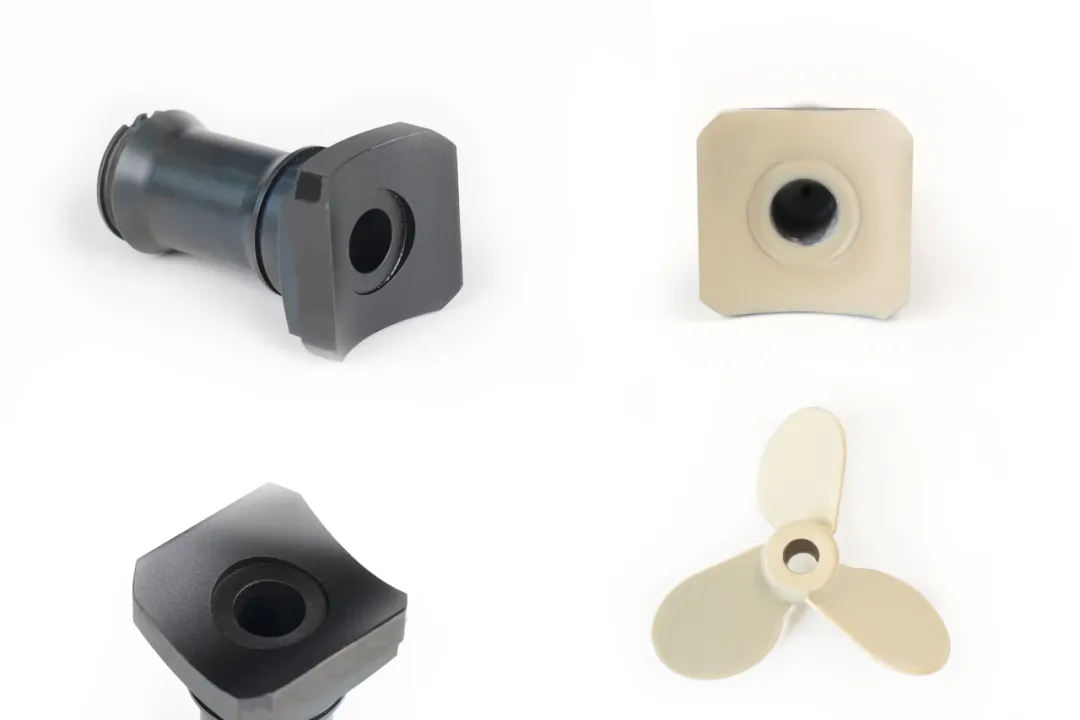
4. Wide Applications: Empowering High-End Manufacturing in Multiple Industries
With its excellent performance, PEEK coating technology has been widely used in various high-end manufacturing fields, injecting “durability” into the industry:
- Automotive Manufacturing: Used for the surface treatment of key components in engines and transmission systems, improving the high-temperature resistance and wear resistance of components and reducing failure rates;
- Petrochemical Industry: Covering components such as valves and pumps that come into contact with corrosive media, resisting chemical erosion and extending the equipment maintenance cycle;
- Medical Devices: Applied to the surface of surgical instruments, it combines biocompatibility and disinfection resistance to ensure medical safety;
- Wafer Semiconductor: PEEK coating is used in the manufacture of carriers and fixtures to achieve anti-static and wear-resistant properties, protecting wafers from damage;
- Home Appliances and Kitchenware: Used as a non-stick and protective coating, it has the advantages of self-lubrication and wear resistance, improving the service life and user experience of home appliances.
Conclusion
PEEK coating technology is not only a “miracle doctor for repairing damaged components” — it can extend the service life of core components of old equipment and reduce replacement costs; it is also a “magic pen for improving the performance of new products” — endowing newly manufactured components with multi-dimensional protection capabilities to adapt to more harsh use scenarios. Under the trend of industrial manufacturing transforming towards “high efficiency, durability, and low consumption”, PEEK coating technology is redefining the standards of industrial component surface engineering, providing an efficient solution to solve problems such as component wear, corrosion, and adhesion.
If your enterprise is troubled by the above industrial problems, you may wish to try PEEK coating technology, allowing metal components to be clad in “golden armor” and opening a new experience of efficient production.