
Preface
A single electrostatic spark on a semiconductor production line can scrap entire batches of wafers — this is no exaggeration, but a daily reality in manufacturing facilities.
Electrostatic discharge (ESD) can damage electronic components, attract dust particles, and cause unstable production yields. As semiconductor manufacturing processes advance and advanced packaging technologies evolve, the industry sets increasingly stringent requirements for material performance. Beyond basic mechanical properties, dimensional stability, cleanliness, anti-static performance and consistent machinability have become critical factors determining stable production line operation.
Junhua’s Full Industrial Chain Layout
Resin Polymerization | Profile Extrusion | Precision Component Machining
For nearly 20 years, Junhua Co., Ltd. has deeply cultivated the full PEEK industrial chain, and the development of anti-static PEEK materials is a natural extension of our expertise rather than a superficial market pursuit. We control every link from resin polymerization and profile extrusion to precision part processing, enabling us to deliver reliable anti-static material solutions end-to-end.
01 Overcoming Core Industry Challenges
Anti-static performance is merely the starting point; zero particle shedding is our non-negotiable bottom line
Semiconductor manufacturing environments demand extreme cleanliness. For conventional anti-static plastic materials, conductive additives tend to detach from the substrate during CNC machining or long-term service, generating particulate contaminants. Once these particles come into contact with wafer surfaces, they may scratch the substrates or even lead to full batch scrappage.
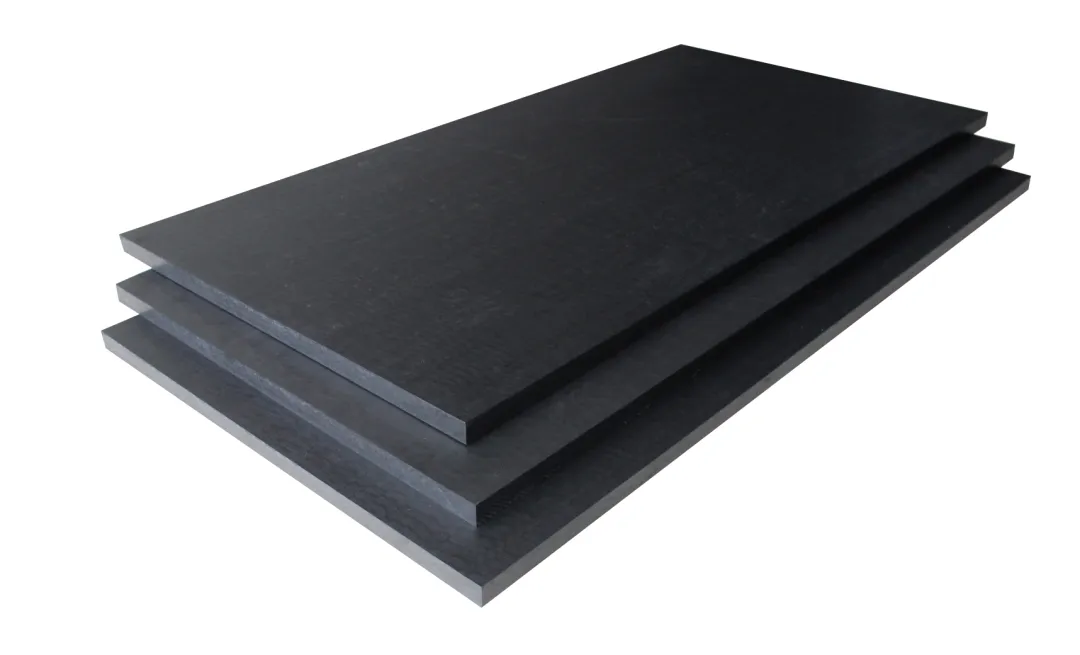
Junhua adopts self-developed modification formulas and precision extrusion technologies to achieve high interfacial bonding between conductive fillers and the PEEK matrix, forming dense, uniform internal structures within profiles and finished parts. No powder or debris will shed during machining or service. Even with direct contact with precision devices such as wafers, the material avoids particulate contamination, safeguarding production line cleanliness and product yields from the source.
Uncompromised Mechanical Properties — Rigid Tooling with No Deformation
Generic anti-static plastics tend to form burrs and rough edges after CNC machining. Insufficient strength and modulus also result in poor structural support, causing test fixtures to sag and deform. Frequent fixture replacement triggers unplanned downtime and rising maintenance costs.
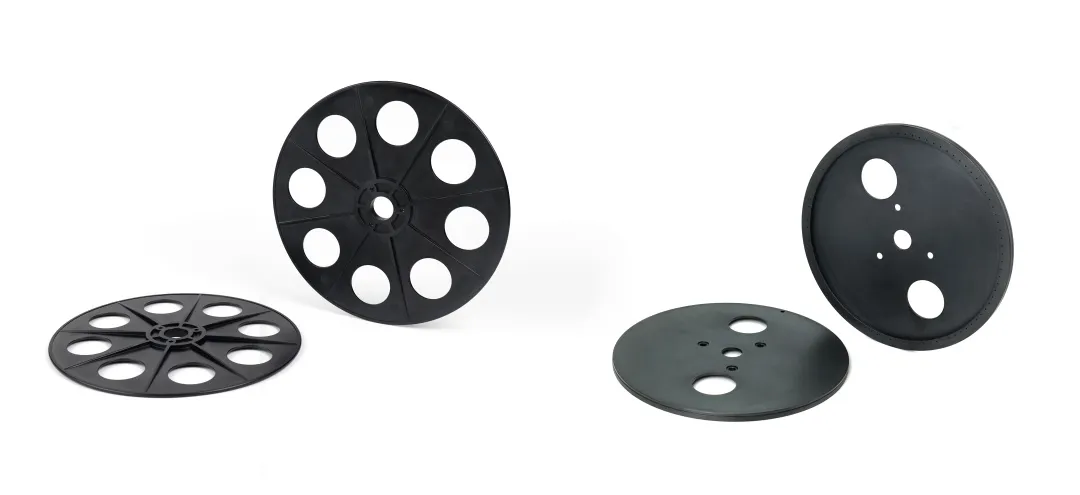
Junhua’s anti-static PEEK delivers outstanding mechanical performance alongside ESD protection:
High tensile strength and high modulus deliver robust structural support and superior machinability. Machined components feature rigid supporting structures and smooth edges free of burrs. The material’s high stiffness resists deformation and stringing effects during cutting operations. Extended service life reduces production line downtime incurred by frequent fixture replacements.
Dimensional Stability: The Hidden Threshold for Precision Machining
For semiconductor test fixtures, high-temperature matrix trays and other precision components, consistent dimensional stability during machining and long-term service is indispensable. Wafers are manufactured to fixed dimensional tolerances; minor dimensional deviations in wafer carrier tooth profiles can crack wafers. Parts must retain stable geometry even after repeated high-low temperature cycling.
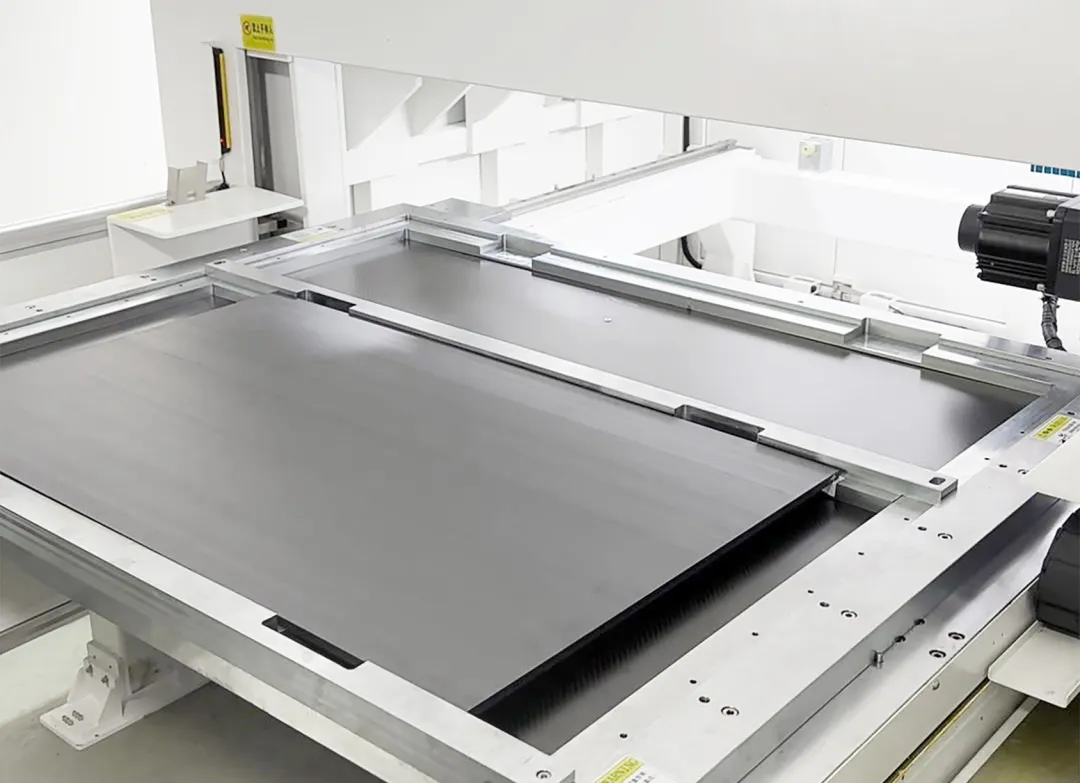
Leveraging optimized formulations, mature extrusion molding processes and rigorous post-production stress relief treatment, Junhua anti-static PEEK standard test specimens (T10×600×1000mm) maintain warpage within acceptable industrial limits. After gradient heating from 25°C to 260°C, 48-hour thermal insulation at 260°C and cooling back to ambient temperature, the dimensional change rate is controlled at ≤0.05%, meeting long-term precision requirements for wafer carrier tooth profiles.
Warpage reflects the uniformity of internal material stress. Junhua implements full-process production control covering extrusion temperature calibration and annealing optimization to minimize internal residual stress, eliminating the common warpage and deformation risks of standard anti-static plastic sheets.
02 Universal Adaptability to Harsh Working Conditions
Semiconductor production lines often operate under high temperatures, corrosive chemical media and continuous mechanical friction. Materials that only provide anti-static protection but fail to withstand heat, abrasion or chemical corrosion deliver limited practical value. Junhua’s anti-static profiles maintain stable performance across all harsh operating environments:
| Test Item | Test Standard | Unit | PEEK5600ESD Z01 | PEEK5600ESD J01 | PEEK5600ESD M01 |
|---|---|---|---|---|---|
| Density | ISO 1183 | g/cm³ | 1.41 | 1.39 | 1.48 |
| Melt Flow Index | ISO 1133 | g/10min | 4.25 | 6.02 | 2.21 |
| Tensile Strength (23°C) | ISO 527 | MPa | 100.82 | 102 | 74.1 |
| Tensile Modulus (23°C) | ISO 527 | GPa | 6.04 | 5.5 | 7.26 |
| Tensile Elongation at Break (23°C) | ISO 527 | % | 4.2 | 5.8 | 3.04 |
| Flexural Strength (23°C) | ISO 178 | MPa | 186.33 | 155 | 114.51 |
| Flexural Modulus (23°C) | ISO 178 | GPa | 5.77 | 4.2 | 6.46 |
| Notched Izod Impact Strength | ISO 180/A | kJ/m² | 4.06 | 4.6 | 2.34 |
| Shore Hardness | GB/T 2411-2008 | – | 91 | 86 | 67 |
| Melting Point | DSC | °C | 343 | 343 | 343 |
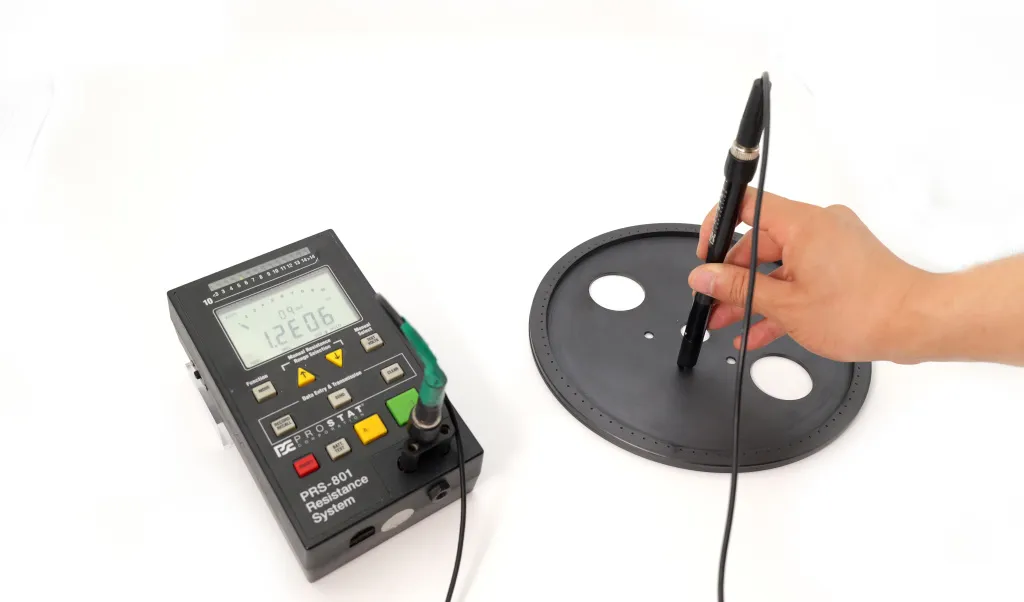
| Surface Resistivity | IEC 61340 | Ω | 10⁶~10⁹ | 10⁶~10⁹ | 10⁶~10⁹ |
- High Temperature ResistanceContinuous service temperature reaches 260°C, withstanding transient higher temperatures. Mechanical properties remain stable under thermal loads, suitable for high-temperature matrix trays and pre-burn test slots.
- Superior Wear ResistanceBalanced surface hardness and self-lubricity prevent scratching when contacting silicon wafers. Minimal particle generation during machining and service preserves cleanroom conditions.
- Excellent Chemical ResistanceResistant to most acids, alkalis, salts and organic solvents (except concentrated sulfuric acid), maintaining structural integrity amid various corrosive semiconductor process fluids and extending component service life.
- Ultra-Low Metal Ion LeachingMinimal metal ion residue under high-temperature friction conditions, protecting wafer yield rates even under extreme thermal operating environments.
A single material resolves five core production pain points simultaneously: static electricity, high temperature, abrasion, chemical corrosion and particulate contamination.
03 Core Competitive Advantages of Junhua Anti-Static PEEK
Material performance is foundational, yet stable mass delivery, rapid customized formulation adjustment and reduced customer validation costs are the underlying priorities for engineering plastic material selection.
1 Fully Self-Controlled Full Industrial Chain
While many domestic suppliers provide PEEK profiles, few independently complete upstream resin polymerization — Junhua Co., Ltd. is one of the select few.
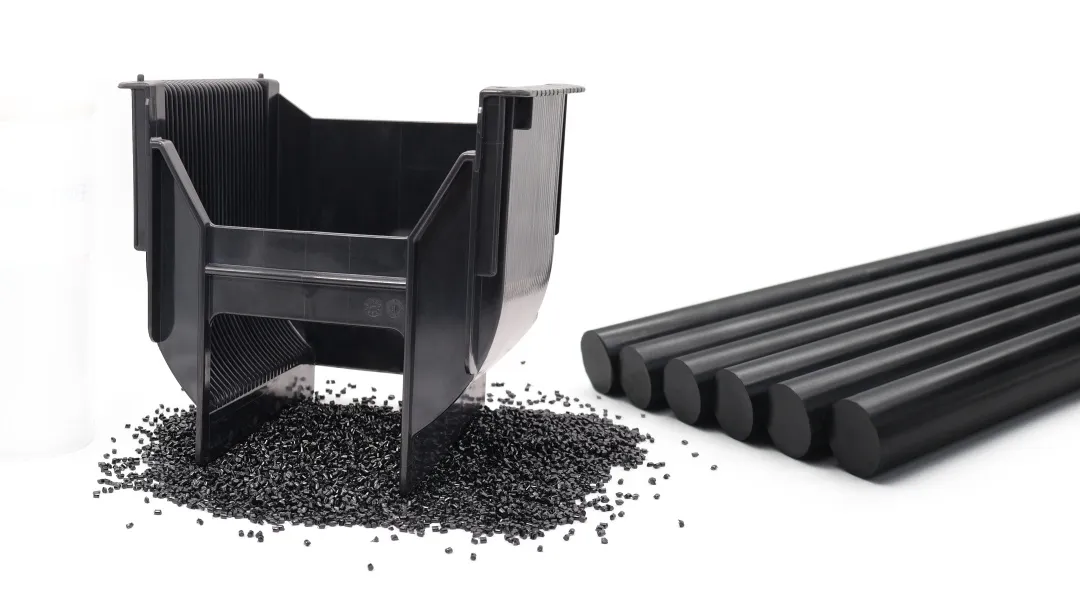
This vertical integration delivers distinct benefits:
- We independently develop and tune conductive filler formulations without relying on third-party standard raw materials.
- All production parameters (extrusion temperature, screw speed, cooling rate) are fully controllable, guaranteeing consistent batch-to-batch performance.
- Custom resistivity adjustments can be implemented directly via in-house formula optimization, eliminating communication delays with external raw material vendors.
- A streamlined integrated production line covers powder raw materials, pellets, extruded profiles and finished machined components. Fewer intermediate links reduce information loss, enabling fast root-cause analysis and rapid performance optimization.
2 Rapid Customization & Customer Response
Upon receiving customer feedback or new performance requirements, our team accelerates formula modification and sample production. In-house modification and extrusion lines enable seamless coordination between formula tuning and sample manufacturing, shortening product development and validation cycles.
3 In-House Application Validation & Machining Technical Support
Most material suppliers only provide base materials and physical property data, leaving full application validation to customers. Junhua leverages internal extrusion and precision machining capabilities to conduct pre-evaluation for new grades and customized formulations during product development. We complete targeted performance verification for core scenarios including wafer transmission, high-temperature service and CNC machinability.
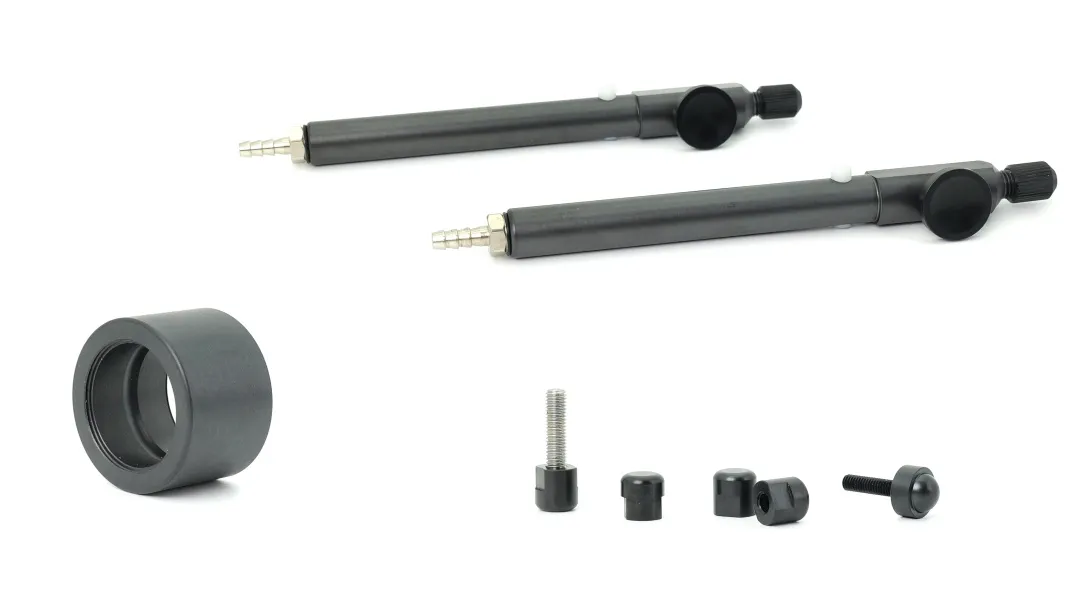
After precision CNC processing, Junhua anti-static PEEK profiles can be fabricated into core semiconductor fixture components including positioning pins, support posts and annular sleeves, featuring flawless edge finishing and micron-level dimensional accuracy.
Thanks to the material’s high modulus and excellent cutting performance, machining generates zero burrs or edge chipping, eliminating secondary manual finishing steps and directly meeting production line assembly specifications. All profiles and finished products undergo strict surface resistivity testing before factory release.
4 Three Major Grades Covering All Manufacturing Routes
Our PEEK5600ESD anti-static material portfolio fully supports three mainstream processing technologies: extrusion, compression molding and injection molding.
Three Grades Covering All Processing Routes
Three Grades Covering All Processing Routes
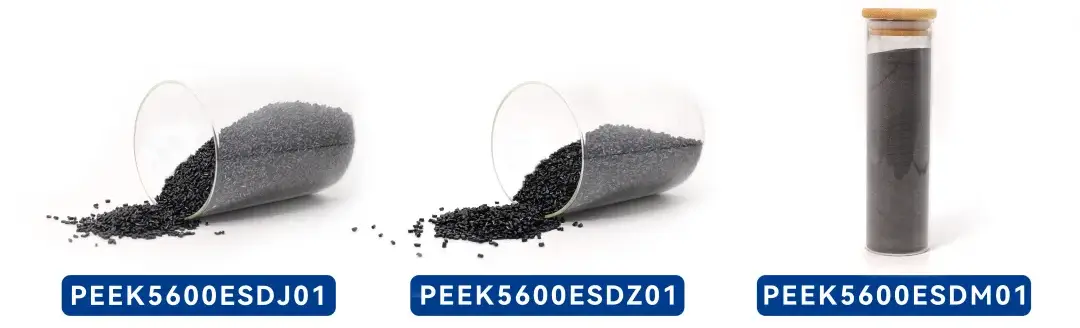
PEEK5600ESDJ01: Extrusion Grade,For continuous profiles such as sheets and rods
PEEK5600ESDZ01:Injection Molding Grade,High-efficiency molding of complex structural components
PEEK5600ESDM01:Compression Molding Grade,For large-size thick-wall products
The three production routes cover diverse manufacturing scenarios, with customizable surface resistivity ranging from 10⁶ Ω to 10¹¹ Ω. Customers no longer need to compromise between processing methods and targeted anti-static grades.
Anti-static protection, high mechanical strength and exceptional dimensional stability are simultaneously achieved without trade-offs.
Consistency extends beyond material lab data, covering uniform batch output, reliable machinability and stable long-term field performance. Centered on the performance demands of the semiconductor industry, Junhua continuously optimizes anti-static PEEK formulations and process control. Drawing on nearly 20 years of full industrial chain expertise, we deliver stable, trustworthy engineered material solutions for global manufacturers.